Episode 01 — Joker's Gambit
Turn-based puzzle · Banter Meter: Top banter
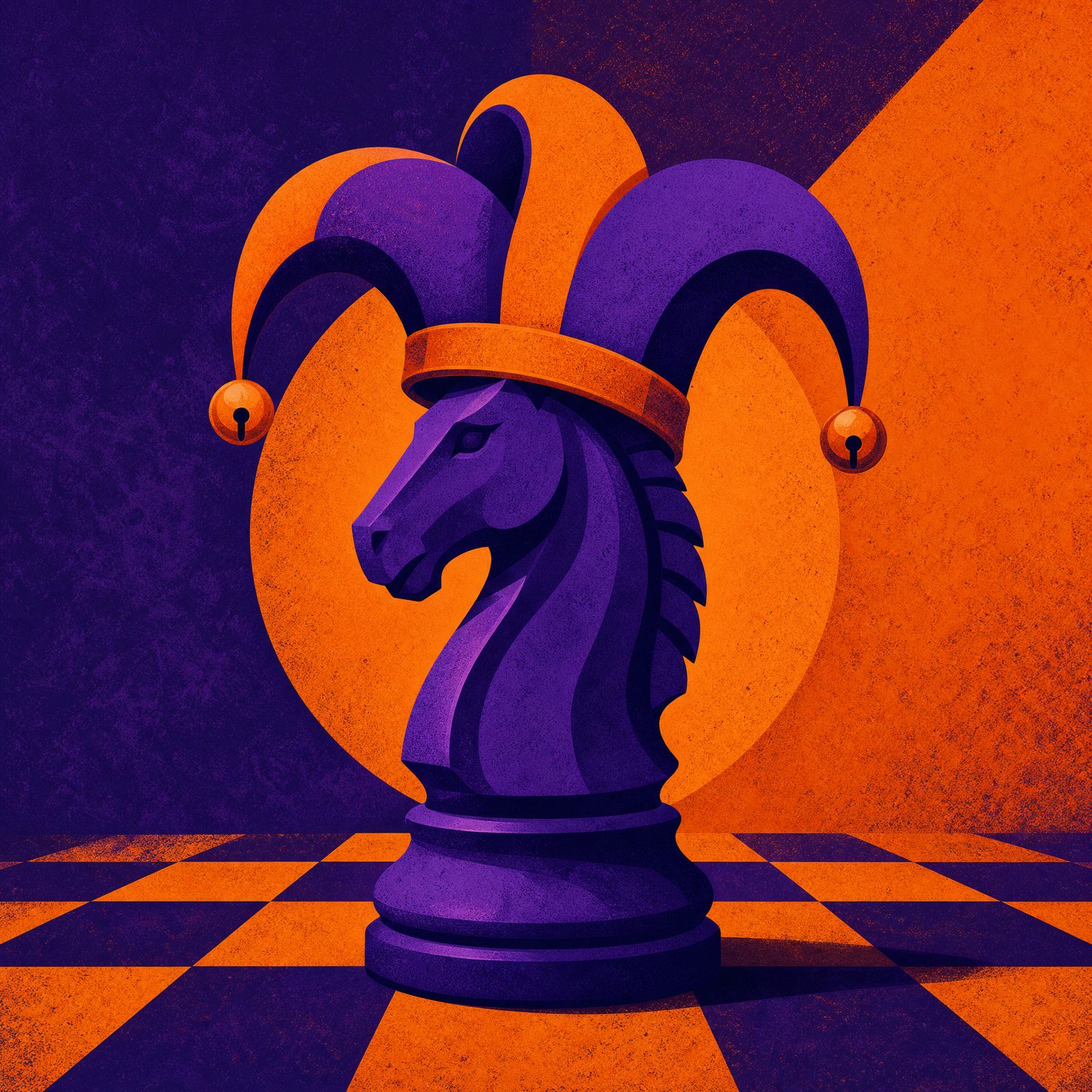
Joker's Gambit hands you a single piece — a jester who moves like a chess knight — and asks you to clear increasingly devious board puzzles. Each level is a compact riddle: reach the exit square, collect every bell along the way, and never land where a patrolling rook can see you. The twist arrives around level twelve, when the game starts letting you leave a "decoy hat" on a square you've visited, splitting the guards' attention. From that moment the whole thing opens up like a music box.
Zoe adored the pacing. Levels take ninety seconds when you're right, and a delicious eternity when you're wrong. Tom, who plays chess badly but enthusiastically, spent the first session insisting the knight-movement was "a war crime against pattern recognition" before quietly finishing forty levels in one evening. The hint system deserves special mention: instead of showing the solution, it replays your last three attempts side by side so you can spot your own bad habit. More puzzle games should be this respectful.
What we argued about
Whether the later "mirror jester" levels — where a second jester copies your moves in reverse — are brilliant or simply cruel. Zoe says brilliant. Tom says cruel. The debate consumed twenty minutes and one entire packet of shortbread.
Who it suits
Anyone who likes their puzzles quiet, logical and slightly smug. It's turn-based, so it survives interruptions gracefully — a genuinely great pick for a commute with patchy reception, since everything runs offline once loaded.
Verdict: Top banter. The rare puzzler that made both of us want to grab the phone off the other. Still arguing about the mirror levels.
Episode 02 — The Laughing Stack
Balance arcade · Banter Meter: Good banter

The premise fits in a sentence: blocks drop, you nudge them into a tower, and a jester's hat perched on top must never touch the ground. What the sentence doesn't convey is the physics — gloriously, deliberately wobbly, so every tower develops a personality. Some lean politely. Some develop a mid-section shimmy at block fifteen that no amount of careful placement can cure. The hat slides, teeters, and recovers with a little bell-jingle that we both now hear in our sleep.
Sessions are short by design. A good run lasts three or four minutes, which makes it dangerously easy to have "one more go" nine consecutive times. The game keeps a gallery of your collapsed towers with their final block counts, rendered as little framed portraits — a genuinely funny touch that turns failure into a keepsake. Zoe's record stands at 41 blocks. Tom's stands at 28, and he has theories about why that we did not have time to air in full.
What we argued about
Wind. Around block twenty the game introduces a gentle breeze, telegraphed by drifting leaves. Tom considers this fair warning. Zoe considers it "meteorological sabotage". The audience mailbag split exactly down the middle.
Who it suits
Fidgeters, queue-standers, and anyone who enjoyed stacking things as a child and never fully grew out of it. Not ideal if wobble-based tension makes you clench your jaw — this game is ninety per cent wobble by volume.
Verdict: Good banter. Simple, cheerful, and the collapsed-tower gallery is the kindest failure screen in casual gaming.
Episode 03 — Fool's Orbit
One-thumb arcade · Banter Meter: Top banter

Fool's Orbit casts you as a tiny jester adrift in a pastel solar system. Hold your thumb down and you orbit the nearest planet; release, and you fling off on a tangent toward the next one. That's the entire control scheme, and it's perfect. Each level is a constellation of planets, moons and drifting bells to collect, and the skill ceiling hides in the release timing — a late let-go sends you spiralling into the void with a tiny, resigned "wheee" that never stopped being funny across two full recording sessions.
The soundtrack deserves its own paragraph. Every planet hums a different note, and orbiting several in sequence builds actual chords, so a well-played level composes its own gentle tune. Zoe called it "the first game soundtrack I'd hum voluntarily". Tom tried to play the level-nine chord progression on his ukulele on air. We have since received mail asking us never to allow that again, which is fair.
What we argued about
Almost nothing, which for us is remarkable. The closest thing to a dispute was whether the black-hole levels in the final constellation break the game's calm mood. Tom says they add stakes. Zoe says the void doesn't need stakes; the void is the stakes.
Who it suits
Everyone, honestly. It's the game we hand to friends who claim they "don't play games". One thumb, no timers, no fail states outside the optional challenge orbits — just a jester, some planets, and physics doing something beautiful.
Verdict: Top banter — achieved, unusually, through violent agreement. Our most recommended game to date.
Episode 04 — Court of Jesters
Card-duel strategy · Banter Meter: Good banter
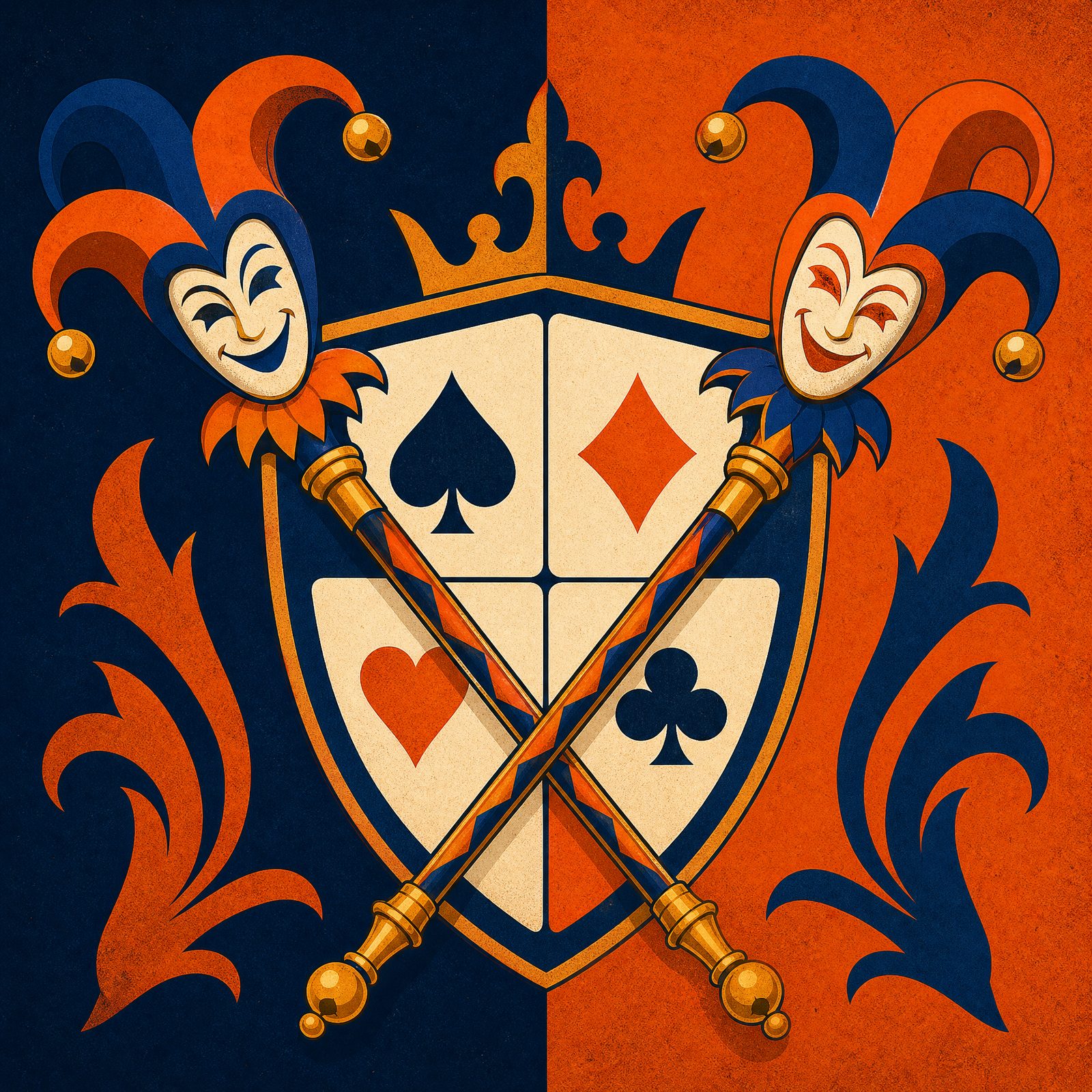
Court of Jesters is the deepest game we've covered: a duelling card game where you and an opponent take turns seating jesters at a royal court. Each jester card carries a joke type — slapstick, wordplay, satire, mime — and scoring depends on how your act plays against the mood of the fickle monarch, which shifts every round. Seat a mime during the monarch's "restless" mood and you lose the room; save your best satirist for the "pompous" mood and the crowd erupts.
Tom fell hard for this one. By the second session he had a notebook, and by the third he was using the word "meta" without irony. The single-player gauntlet is generous — thirty hand-built opponents, each with a readable style — and the daily puzzle mode, which deals you a fixed hand and demands a perfect court, is a genuinely brilliant five-minute ritual. Zoe enjoyed it in shorter doses, mostly for the flavour text, which is consistently funnier than it has any right to be.
What we argued about
Complexity creep. The base game teaches itself beautifully in ten minutes, but the later gauntlet opponents demand combo lines that Zoe felt belonged in "a game wearing a much more serious hat". Tom's rebuttal — "the hat has bells on, how serious can it be" — was ruled inadmissible.
Who it suits
Lapsed card-game players, spreadsheet enjoyers, and anyone who wants a casual game that rewards a second cup of thought. Fully playable offline, and the daily puzzle takes five minutes flat.
Verdict: Good banter, trending toward top for card nerds. The daily puzzle alone earns it a place on your home screen.
Episode 05 — Bell Curve
One-tap timing · Banter Meter: Mild banter
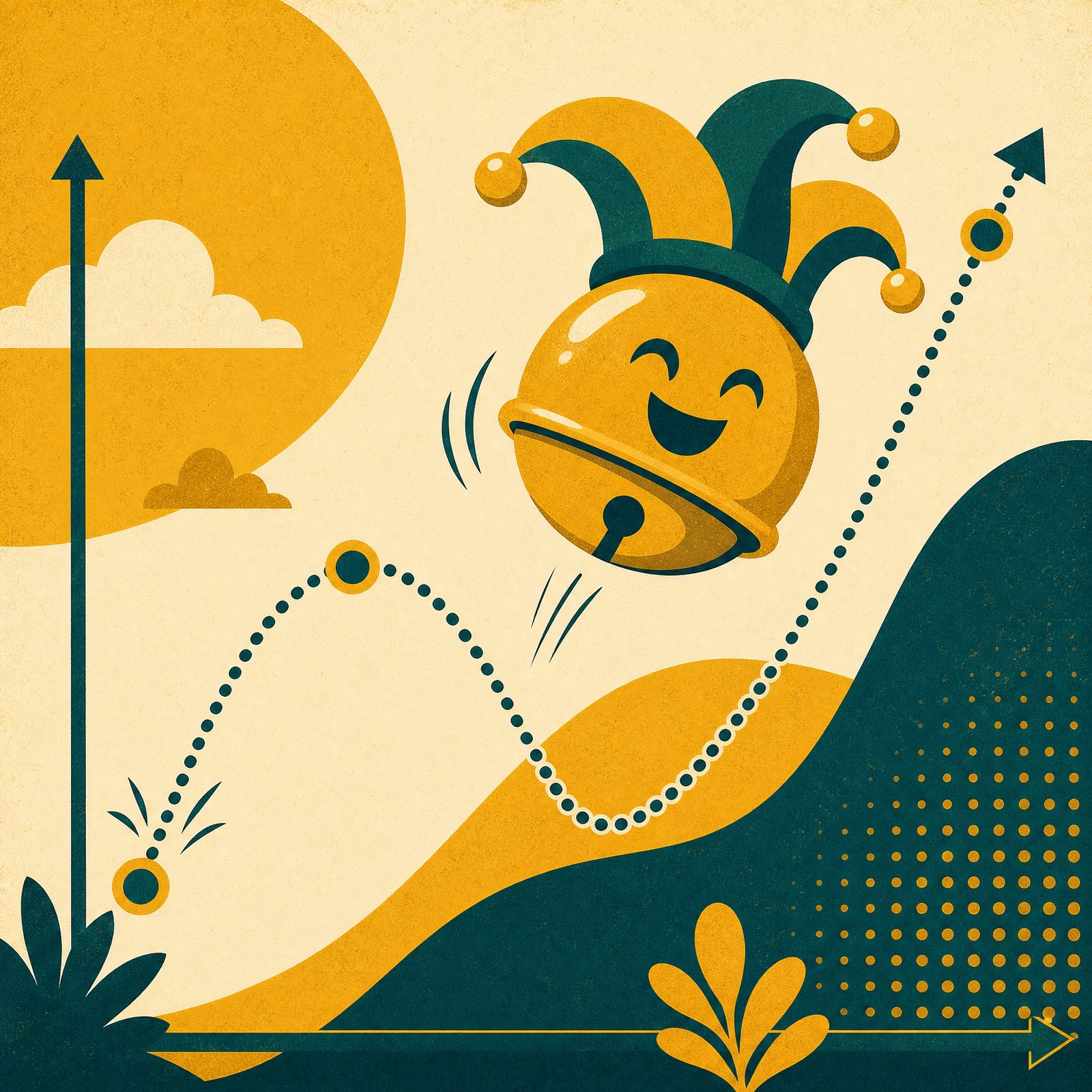
Bell Curve is the purest game on this list: a grinning jester bell bounces along a curved path, and you tap once per bounce to keep it on the line. Tap early and it undershoots; tap late and it sails off the curve with a mournful clonk. Each of the sixty levels draws a new arc — hills, loops, a memorable stretch shaped like a sleeping cat — and the whole thing wraps up in a few hours of relaxed play.
We liked it. That's the review, really, and therein lies the problem for a show built on disagreement: Bell Curve is agreeable to a fault. The timing is fair, the difficulty curve is textbook (appropriately), the bell's face is charming, and neither of us could summon a strong opinion beyond "yes, that's nice". Zoe finished it in two sittings on the couch. Tom finished it in the bath, which we agreed off air was too much information for the listeners.
What we argued about
Genuinely nothing. At one point we argued about whether we'd ever argued this little, which became the episode's longest segment.
Who it suits
Anyone after a low-stakes wind-down game — the gaming equivalent of a cup of chamomile. Perfect before bed; the gentle audio design practically lowers your heart rate on purpose.
Verdict: Mild banter — but read that as a compliment to the game and a complaint about our format. Lovely, calm, complete.